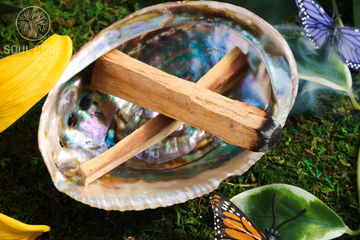
Smoke has always been a bridge between the visible and invisible.
Across cultures, plants have been burned not to remove energy, but to communicate with it — to signal transition, prayer, grief, celebration, and protection.
Smudging, as it is commonly known today, originates from Indigenous traditions, particularly among Native American nations. It was never intended as a casual cleansing habit, nor as a daily ritual performed without context.
To work with smoke respectfully is to understand when, why, and how it is meant to be used.
The Origins of Smudging
Traditional smudging practices were ceremonial and intentional. Plants such as white sage, cedar, sweetgrass, and tobacco were used in specific ways, often guided by elders or within sacred contexts.
Smoke was used to:
-
Prepare space for ceremony
-
Clear heavy or intrusive energy
-
Mark transitions
-
Support prayer and healing
It was not used continuously, nor indiscriminately.
Understanding this lineage matters — not to create fear around practice, but to restore integrity to it.
Smoke Is Not for Everything
In modern spiritual spaces, smoke is often used automatically — after visitors, before sleep, during stress, or simply “because it feels off.”
But smoke is activating.
It moves energy. It disrupts stagnation. It calls attention.
This means it is not always appropriate.
Overuse of smudging can:
-
Agitate the nervous system
-
Create energetic instability
-
Disrupt emotional processing
-
Leave people feeling scattered or unsettled
Especially for sensitive individuals, less is often more.
February and the Wisdom of Discernment
February is an emotionally reflective month. During this time, the system often needs containment, not disruption.
This is why February is not always ideal for frequent smoke cleansing.
Instead, smoke is best used when:
-
Energy feels dense or intrusive
-
There has been conflict or emotional residue
-
A clear boundary or transition is needed
It is not meant for daily emotional regulation.
Respectful Alternatives to Smoke
When smoke feels too strong, gentler practices can be more supportive:
-
Florida Water
-
Sound (bells, bowls)
-
Breath and intention
-
Opening windows and fresh air
These methods work with energy without force.
How to Smudge With Intention (When It’s Appropriate)
If you choose to work with smoke, approach it with care.
Before lighting:
Pause and ask:
“What am I clearing — and why?”
If the answer is vague, wait.
During:
Move slowly. Use minimal smoke. Focus on presence rather than performance.
After:
Ground yourself. Drink water. Allow the space to settle.
Smudging is not complete until the system feels calm again.
A February Smoke Ritual for Boundaries
Use sparingly.
-
Light your chosen plant.
-
Let the smoke rise gently.
-
Speak softly or silently:
“Only what supports clarity and safety remains.”
-
Extinguish fully.
-
Sit quietly for a few minutes.
This ritual is about discernment, not domination.
Closing Reflection
Sacred practices lose power when removed from context.
When we return smoke rituals to their rightful place — intentional, respectful, and measured — they regain their wisdom.
February teaches us that not everything needs to be cleared.
Some things need to be held gently until they settle.